
What happens after a root canal? For many patients, the answer is an important next step that does not receive enough attention: restoring and protecting the tooth. Root canal therapy can remove infection from inside a damaged tooth and preserve the natural tooth whenever possible. However, the treatment is only part of the restoration process for many patients.
After a root canal, your dentist may recommend a dental crown to protect the remaining tooth structure and restore normal function. At Eversmiles Dental in Pasadena, TX, restorative dentistry includes root canal therapy and crowns designed to help patients regain comfortable, functional smiles. Explore restorative dentistry at Eversmiles Dental.
Why Does a Tooth Need a Root Canal?
Inside every healthy tooth is a soft area called the pulp. It contains nerves and blood vessels that help support the developing tooth. Once a tooth has fully matured, it can survive without that internal pulp because the surrounding tissues continue to provide support.
When bacteria reach the pulp through deep decay, a crack, trauma, or repeated dental procedures, the pulp can become inflamed or infected.
At that point, a filling may no longer be enough. Instead, root canal treatment may be recommended to remove the infected tissue, clean the inside of the tooth, and seal it.
Symptoms that may lead to a root canal evaluation include persistent tooth pain, sensitivity to hot or cold, pain when chewing, swelling, or a recurring problem around a particular tooth.
Can a Root Canal Be Done in One Day?
In many cases, yes. Eversmiles Dental notes that many root canals can be completed during a same-day visit when the clinical circumstances make that possible.
However, same-day treatment does not necessarily mean every patient will complete every stage of the restoration in a single appointment. The condition of the tooth, infection level, restoration requirements, laboratory needs, and other factors can affect the timeline.
The important advantage of same-day root canal treatment is that patients may be able to address the source of pain and infection without waiting several days for the initial treatment.
What Happens During a Root Canal?
Root canal treatment begins with an examination and diagnosis. The dentist evaluates the tooth and may use digital imaging to understand the roots, surrounding bone, and extent of the problem.
Once treatment begins, local anesthesia is used to numb the area. The dentist then creates access to the inside of the tooth and removes the affected pulp.
The root canals are carefully cleaned and disinfected. They are then filled and sealed to help prevent bacteria from re-entering the space.
Depending on the condition of the tooth and the treatment plan, a temporary or permanent filling may be placed before the final restoration.
Why Is a Crown Often Recommended?
A root canal does not automatically mean that a crown is required for every tooth. However, many teeth that need root canal therapy have already lost a significant amount of structure because of decay, cracks, previous fillings, or trauma.
Additionally, some teeth are exposed to substantial chewing forces. A crown can cover and protect the remaining tooth structure.
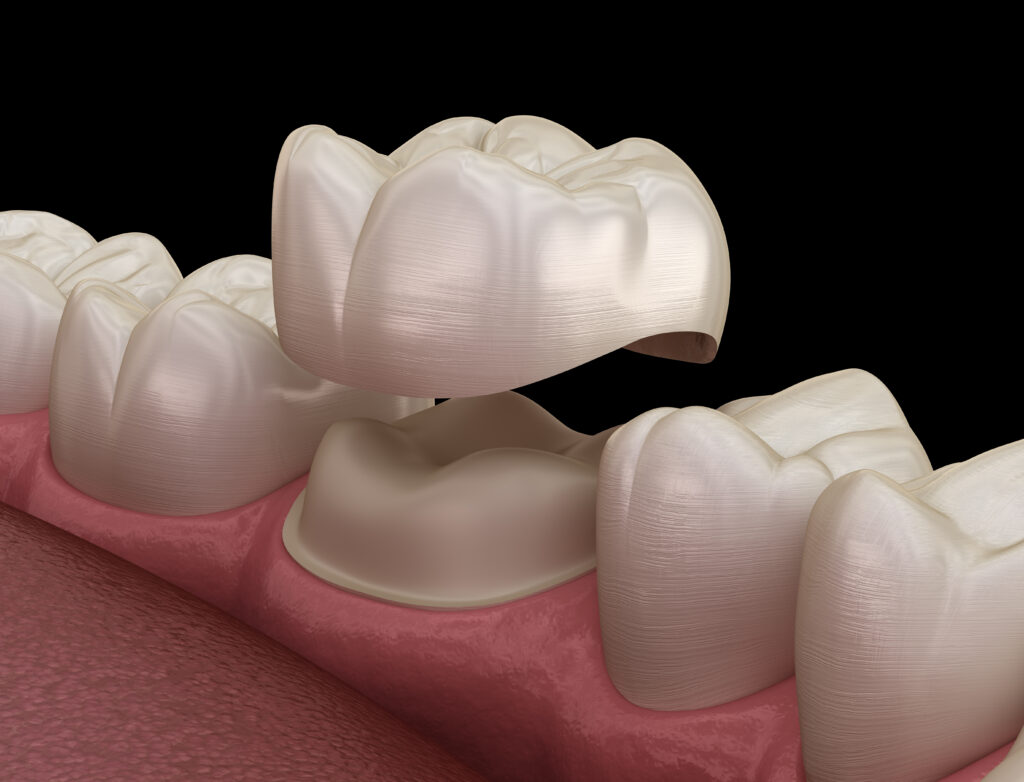
A crown is essentially a custom-made restoration that fits over the prepared tooth. It restores the tooth’s shape and helps protect it from further damage.
Eversmiles Dental describes crowns as versatile restorations that can protect damaged or decayed teeth, restore teeth after root canal treatment, and improve the appearance of misshapen or discolored teeth.
How a Crown Protects the Tooth
Imagine a tooth that has been weakened by a large cavity. Removing decay is necessary, but it may leave the tooth with less natural structure than it had before.
A crown can provide coverage around the remaining tooth and distribute biting forces across the restoration.
This is particularly useful for back teeth, which handle significant chewing pressure.
The goal is not simply to make the tooth look complete again. The restoration should also help the tooth function comfortably while protecting it for the future.
Does Every Root Canal Need a Crown?
Not necessarily. The appropriate restoration depends on the tooth involved, how much natural structure remains, the location of the tooth, and the forces placed on it.
Front teeth, for example, experience different biting forces than molars. Some teeth may require a more conservative restoration, while others benefit from full coverage.
Your dentist will evaluate the tooth and recommend the restoration that provides the appropriate balance between preservation, strength, function, and appearance.
What Does a Dental Crown Look Like?
Modern crowns are designed to look natural. They can be customized according to the size, shape, and color of the surrounding teeth.
The objective is for the restored tooth to fit naturally into your smile rather than appearing noticeably different from neighboring teeth.
For patients concerned about aesthetics, your dentist can discuss the available restorative materials and how each option fits your particular tooth.
What Happens Before a Crown Is Placed?
Before the crown is made, the dentist prepares the tooth so the restoration can fit properly. The amount of preparation depends on the condition and structure of the tooth.
Impressions or digital scans may be used to create an accurate model of the tooth. The crown is then designed to fit your bite and surrounding teeth.
In some cases, a temporary restoration may be placed while the final crown is being prepared.
During this period, it is important to follow the dental team’s instructions and avoid putting unnecessary stress on the temporary restoration.
Can a Same-Day Emergency Visit Lead to a Crown?
Yes. A patient may arrive at Eversmiles Dental with severe pain and discover that the tooth needs root canal treatment. After the immediate problem is addressed, the next step may be a crown to protect the tooth.
This is an important distinction between treating a symptom and restoring the tooth.
Root canal therapy addresses the infected or inflamed pulp. A crown may then protect the remaining structure and restore chewing function.
The exact timing will depend on the condition of the tooth and the treatment plan.
What If the Tooth Cannot Be Saved?
Sometimes a tooth is too damaged to restore. A fracture may extend below the gumline. Decay may have destroyed too much structure. Or the tooth may have a poor long-term prognosis for another reason.
In those situations, extraction may be recommended instead of continuing to invest in a tooth that cannot be predictably restored.
That does not mean the treatment journey ends with extraction. Missing teeth can often be replaced with a dental implant, bridge, partial denture, or full denture depending on the patient’s circumstances.
Learn more about dental implants as one possible tooth replacement option.
Dental Implants After Extraction
Dental implants are designed to replace missing teeth with a stable, long-term restoration. The implant acts as a replacement tooth root and can support a crown.
For a patient who loses a single tooth, an implant-supported crown can restore both appearance and function without requiring the neighboring teeth to serve as bridge supports.
However, implants are not automatically the best choice for everyone. Bone volume, gum health, medical factors, oral hygiene, bite forces, and personal preferences all matter.
Bridges as Another Alternative
A dental bridge can replace one or more missing teeth by using support from neighboring teeth or implants.
Bridges are fixed restorations, meaning they are not designed to be removed by the patient during normal daily activities.
They can restore chewing function and help prevent the teeth around a space from drifting into the gap.
For some patients, a bridge may provide a practical alternative to an implant, particularly when the clinical situation or personal preferences make a bridge more appropriate.
Partial Dentures for Multiple Missing Teeth
If several teeth are missing but some healthy natural teeth remain, a partial denture may be considered.
Partial dentures can fill multiple spaces while allowing the patient to retain remaining natural teeth.
They are removable, which makes cleaning and maintenance different from caring for a fixed bridge or implant-supported restoration.
What About Full Dentures?
When all teeth in an arch are missing or need to be removed, a full denture can replace the missing teeth.
Modern dentures are designed to restore both appearance and basic chewing function. However, traditional dentures rest on the gums and may move during eating or speaking.
For patients looking for additional stability, implant-supported dentures may be an option.
Implant-Supported Dentures
Implant-supported dentures use dental implants to provide additional support for a removable denture.
Rather than relying entirely on gum support, the denture attaches to implants, which can improve stability and confidence during daily activities.
Eversmiles Dental describes implant-supported dentures as an alternative to traditional removable dentures for patients seeking enhanced stability, comfort, and function.
How Long Can a Dental Crown Last?
Dental crowns are designed as durable restorations, but no restoration lasts forever under every circumstance.
Longevity can depend on oral hygiene, bite forces, grinding or clenching, diet, the health of the underlying tooth, and routine dental care.
Patients who grind their teeth may benefit from discussing a custom nightguard with their dentist. Protecting the restoration from excessive forces can help preserve both the crown and surrounding teeth.
How Should You Care for a Crown?
Caring for a crowned tooth is similar to caring for natural teeth.
- Brush twice daily with fluoride toothpaste.
- Clean between your teeth every day.
- Attend routine dental examinations.
- Tell your dentist if the crown feels loose or uncomfortable.
- Avoid using your teeth as tools to open packages.
- Discuss nighttime grinding if you clench or grind your teeth.
A crown protects the tooth, but the gumline and surrounding teeth still need daily care.
What If a Crown Feels High?
It is normal for a new restoration to feel different at first because your mouth is sensitive to changes in tooth shape.
However, if the tooth feels significantly higher than the surrounding teeth or your bite feels uncomfortable after the initial adjustment period, contact the dental office.
A simple adjustment may be all that is needed to improve comfort.
Does a Root Canal Hurt?
The purpose of root canal therapy is to eliminate infection and relieve the pain associated with an inflamed or infected pulp. Local anesthesia is used during treatment, and Eversmiles Dental also offers sedation options for patients who need additional comfort support.
Some tenderness may occur afterward, particularly if the tooth was very inflamed before treatment.
If discomfort becomes severe or continues to worsen, contact your dental provider.
Can Root Canal Treatment Prevent an Extraction?
When a tooth can be predictably restored, root canal treatment may allow the patient to keep the natural tooth rather than extracting it.
That is one of the major advantages of endodontic treatment. However, not every damaged tooth is a candidate for root canal therapy.
The dentist must evaluate the remaining structure, the roots, the surrounding bone, and the overall prognosis before recommending treatment.
How Much Does a Crown or Root Canal Cost?
There is no single price that applies to every root canal or crown. Costs can vary according to the tooth, complexity of the procedure, restoration material, additional treatments, and insurance benefits.
Eversmiles Dental offers insurance and financing options, and patients can discuss their treatment estimate and payment options with the office.
If you are comparing treatment choices, remember that cost is only one consideration. The longevity, function, maintenance requirements, and overall health of the tooth should also be considered.
Questions to Ask Before Restoring a Root Canal Tooth
- How much healthy tooth structure remains?
- Does this tooth need a crown?
- What happens if I delay the final restoration?
- What type of crown is appropriate for this tooth?
- How should I care for the tooth while waiting for the final restoration?
- Could a bridge or implant be a better option if the tooth cannot be saved?
- What will my insurance likely cover?
Protect the Tooth You Worked to Save
A root canal can be an important step toward preserving a natural tooth, but the restoration that follows can be equally important. A properly planned crown or other restoration can help return the tooth to normal function and protect the remaining structure.
If you are experiencing tooth pain, have been told you need a root canal, or want to understand whether a damaged tooth can be restored, Eversmiles Dental can evaluate your options in Pasadena, TX.
Call Us Today at Eversmiles Dental to discuss your tooth pain, root canal needs, or restorative treatment options.